
Key takeaways
- FDA's preferred approach is the original bag. Keep dry pet food in its bag when possible, or put the whole bag inside another container.
- The bag preserves identifying information. Keep the lot number, manufacturer, and best-by date available in case of a product problem or recall.
- Pouring loose adds maintenance. Save the identifying information, wash the container between bags, and dry it thoroughly before refilling.
- Location matters. Follow the label and store dry pet food in a cool, dry place; FDA specifies below 80°F.
- This is published guidance, not a product test. We have not tested bins or pet-food shelf life.
The short verdict
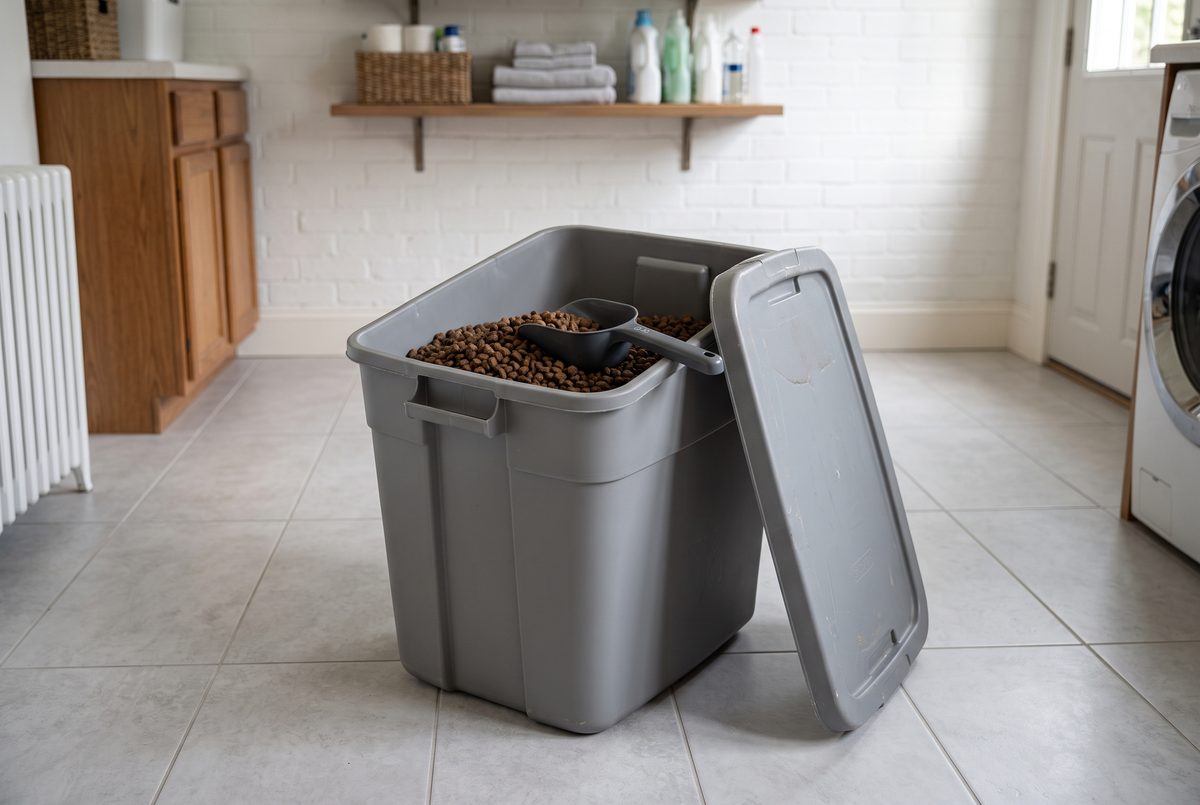
Keep the food in its original bag and place the bag inside a clean outer bin if you want extra protection. This follows FDA guidance and keeps the lot number and best-by date with the food. Pouring loose is possible, but it requires saving that information and cleaning and completely drying the container between bags.
What FDA guidance says
The U.S. Food and Drug Administration advises storing dry pet food in a cool, dry place below 80°F. It also recommends keeping food in its original bag. If you use another storage container, FDA says to put the entire bag inside it rather than automatically pouring the food loose.
The original package carries information that may matter later: the product name, manufacturer, lot number, and best-by date. FDA advises keeping this information available because it can help identify the food if there is a complaint or recall.
If you still prefer to pour the food
Convenience is a legitimate reason to consider decanting, but it does not erase the maintenance requirements. Before discarding the bag, record or photograph the product name, manufacturer, lot number, and best-by date. Keep that record until the food is finished.
FDA also advises washing the storage container between bags and drying it thoroughly before adding new food. Follow the container manufacturer's care instructions and the pet-food label. Do not claim that a generic bin preserves food better unless the relevant manufacturer supplies evidence for that exact claim.
How to choose an outer container
Start with fit rather than marketing. Measure the bag at its fullest point, the available shelf or floor space, and any doorway or cabinet opening the container must clear. Check the manufacturer's published interior dimensions—not only the advertised capacity—and make sure the bag can be inserted and removed without tearing.
Look for a lid that closes consistently, a surface the manufacturer says can be cleaned, and a size that does not require unsafe lifting when full. These are editorial selection criteria, not proof that one material or brand is universally better.
Garage and RV storage
FDA's cool, dry, below-80°F guidance is the governing constraint. If a garage or parked RV exceeds that condition, the better first decision is to find a cooler indoor location rather than assume an organizer can compensate for the environment. Follow the food manufacturer's label where it is more specific.
Decision table
| Question | Bag inside bin | Food poured loose |
|---|---|---|
| Matches FDA's preferred setup | Yes | No; FDA lists extra steps |
| Lot and best-by information | Remains on the bag | Must be saved separately |
| Container cleaning | Follow normal outer-bin care | Wash and thoroughly dry between bags |
| Daily convenience | The bag may be less tidy to scoop from | May be easier to scoop from |
Who should skip buying a bin
If the original bag already sits in a cool, dry, pest-protected place and is easy to close and use, a new container may not solve a real problem. Buy only when the outer bin adds a measured benefit such as fit, physical protection, or household convenience.
Evidence & limitations
Sources used for this guide
- FDA: Proper Storage of Pet Food & Treats — Storage location, original-bag guidance, identifying information, and wash-and-dry instructions.
Limitation: We have not tested pet-food containers or shelf life. Product-fit advice is editorial reasoning; FDA guidance supports the storage and traceability recommendations.
Measure before you shop
Use the free printable shelf checklist—no email required.