
Approximately under 12 in
Shallow: use the height
Items are usually visible in one row. Risers and tiered inserts can make better use of vertical space.
Storage that fits · Lighting that reveals
Practical guides to food storage, pantry organization, and shelf lighting—built around real measurements, not staged photos. We explain the evidence, the limits, and when a product is not worth buying.
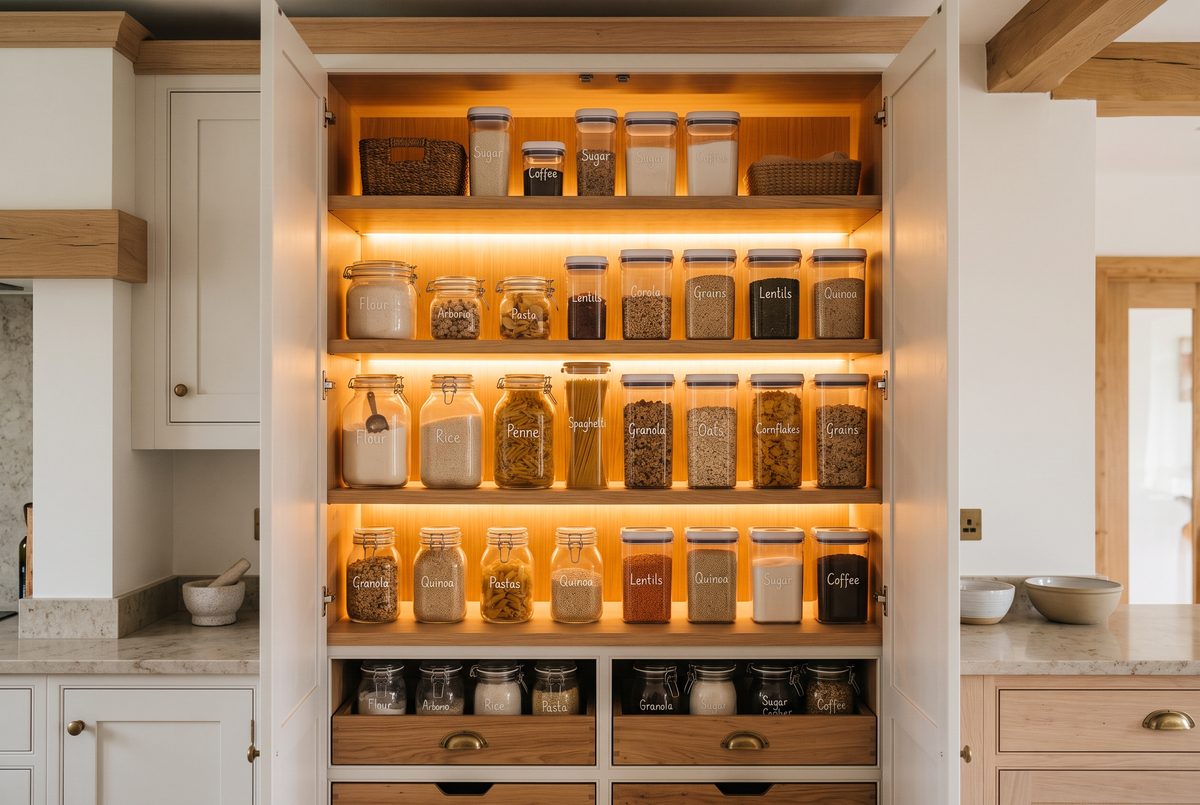
Three useful starting points: diagnose the shelf first, then choose an organization or lighting solution only when the measurement supports it.
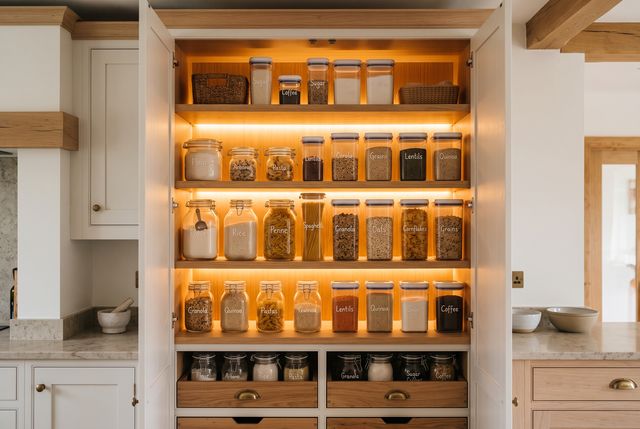 Start here
Measure the shelf, test what is difficult to see or reach, and shortlist the right kind of solution before comparing products.
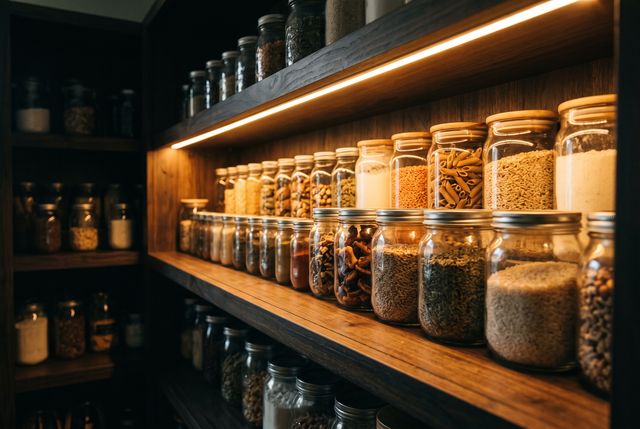 Lighting guide
Compare battery pucks, adhesive strips, and motion sensors by placement, installation limits, and the shelf you actually need to illuminate.
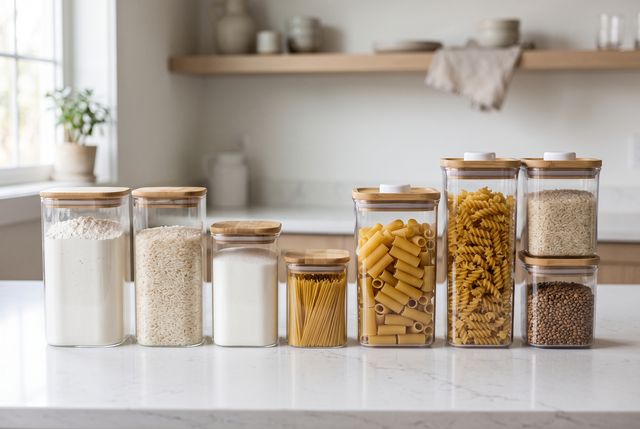 Comparison
Two different storage systems compared through published specifications, shelf fit, care requirements, and who should skip each one.
These zones are a signature editorial framework—not an industry standard. The boundaries are approximate starting points; your shelf opening, sightline, reach, and product dimensions decide what actually fits.
Approximately under 12 in
Items are usually visible in one row. Risers and tiered inserts can make better use of vertical space.
Approximately 12–16 in
Two rows can work when the back remains reachable with a pull-out or a consistent front/backstock rule.
Approximately over 16 in
Pull-outs, turntables, or shelf lighting may help. Measure first and treat lighting as part of storage usability.
Tip of the week
The third one may be a lighting or access problem rather than a container problem. See how to test it.
A careful look at food-contact materials, heat, weight, breakage, and what current evidence can and cannot establish.
Height order, sealed barriers, and labelling that survives a dishwasher.
A genuinely contested question. FDA guidance says one thing, common practice another.
We have not bought 40 containers. Recommendations come from published specifications, material properties, institutional sources, and documented owner feedback where available — and we say which is which.
We may use links from more than one affiliate program. When a link may earn us a commission, we identify that relationship near the link and in our Affiliate Disclosure. Editorial decisions are based on fit and evidence, not commission rate.
Prices change. We focus on measurable fit, materials, care instructions, and credible limitations before any future retailer link is considered.
One printable page: how to measure your shelves, the depth zones that decide what fits, and where to put light so the back of a deep shelf isn't a cave.
No email required. Print it or save it as a PDF.