
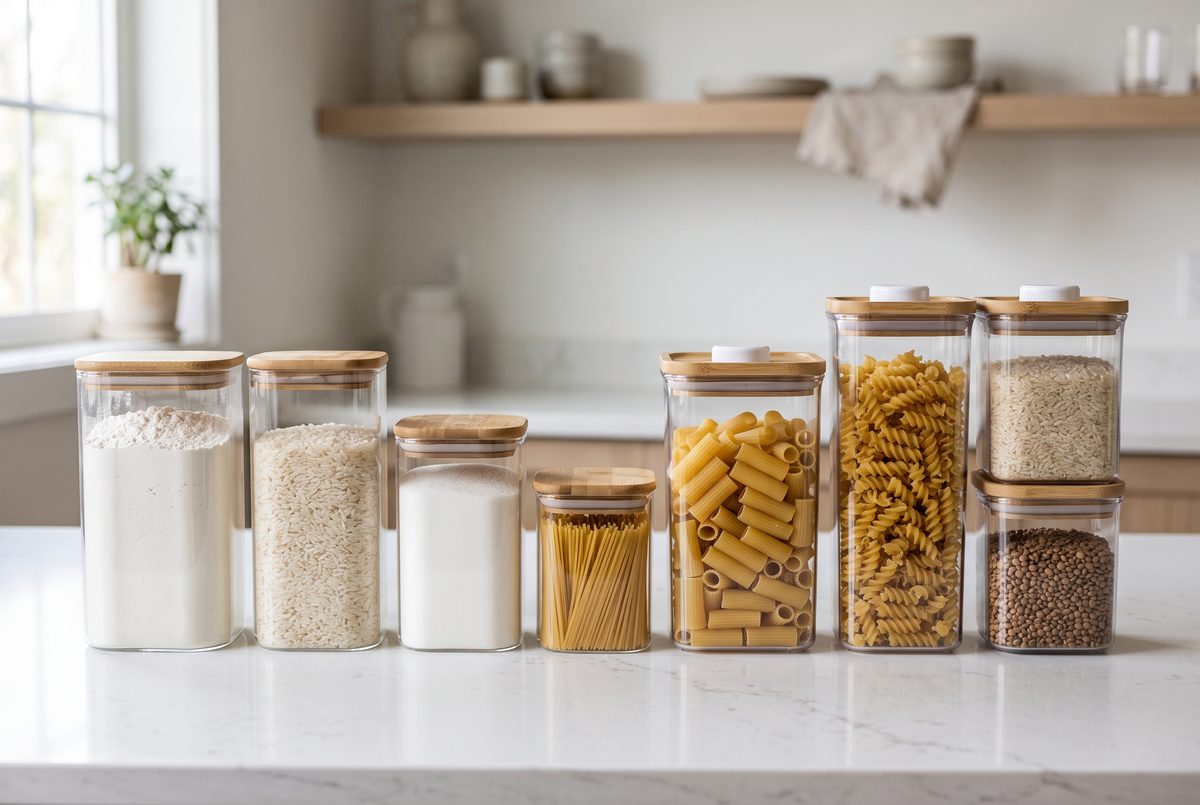
Key takeaways
- Original packaging fails on two fronts. Paper and thin plastic are permeable to air and moisture and, as university extension services note, pantry pests readily chew through them — so the bag protects neither freshness nor against infestation for long.
- Airtight means a gasketed seal, not just a tight-looking lid. A true seal keeps out humidity and denies pests entry; a press-on lid that merely rests on the rim does neither reliably.
- The freezer trick disrupts pest eggs that arrive in the product. Extension guidance describes freezing newly bought flour and grains for several days to kill any insect eggs already present before you decant — sealing an unfrozen bag can trap the problem inside.
- Label with the purchase date and rotate first-in, first-out. Without a date you are guessing at shelf life; FIFO means older stock gets used before newer, which is how you avoid the rancid bag at the back.
- We have not tested these products. Storage requirements here follow published USDA and university extension guidance and material properties; shelf-life figures are general guidance, your senses and any manufacturer date come first, and this is not medical advice.
What's in this guide
- The short verdict
- Why the original bag fails
- What "airtight" actually requires
- The freezer trick, and why sealing alone can backfire
- Choosing the right material per staple
- Labelling, dates, and FIFO rotation
- Realistic shelf life, and when not to bother decanting
- Side-by-side comparison
- What to look at
- Common questions
The short verdict
If you go through a staple regularly, decant it into an airtight rigid container — university extension services recommend sealed containers specifically because pantry pests chew through paper and thin plastic. Match the material to the staple, and use the freezer trick on newly bought flour and grains. Skip decanting anything you use twice a year: that is a container you paid to leave nearly empty, and the original bag in the freezer serves it better.
Why the original bag fails
The bag your flour, sugar, or rice came in was designed to survive shipping and look good on a shelf, not to store the contents well in your kitchen. It fails in two distinct ways, and understanding both tells you what a replacement actually has to do.
First, permeability. Paper sacks and thin plastic film let air and moisture pass. Flour picks up humidity and off-odours; sugar cakes into a brick as it absorbs and re-releases moisture; rice slowly stales. A folded-over bag top is not a seal — it is a delay.
Second, and more urgently, pests. This is the point university extension services make most consistently: pantry pests such as the Indianmeal moth and various weevils and beetles readily chew through paper, cardboard, and thin plastic packaging to reach the food inside. A closed bag on the shelf is not a barrier to them. Extension guidance from cooperative programs repeatedly recommends transferring susceptible dry goods into hard, airtight containers precisely because the original packaging does not keep insects out.
There is a subtlety here that the rest of this guide turns on. Infestations often do not arrive in your kitchen; they arrive inside the product, as eggs already present when you buy it. That means an airtight container, on its own, can seal a problem in rather than out. Sealing is necessary but not sufficient — which is why the freezer step below exists. We are summarizing extension-service guidance here and will name that source again where it matters, rather than asserting these outcomes as our own findings.
What "airtight" actually requires
"Airtight" is used loosely on packaging, so it helps to be concrete about what actually keeps humidity and insects out, because a lid that looks snug often is not.
The working part is a gasket — a silicone or rubber seal that compresses when the lid is closed and clamps, screws, or presses firmly against the rim. That compression is what creates the barrier. A lid that simply rests on the rim, however tight the fit feels, leaves a path for moist air and, over time, for insects. So the feature to look for is an explicit gasket plus a positive closure: a clamp, a screw thread, or a locking mechanism that pulls the gasket tight.
A rigid body matters too. The reason extension services specify hard containers is that determined pantry pests can eventually breach soft or thin materials; glass, hard rigid plastic, metal, or ceramic resist that. Combine a rigid body with a real gasketed seal and you have the barrier the original bag never was.
Fit to the staple is the last piece. The container should be sized so it is reasonably full in normal use, both because air space accelerates staling in some goods and because a mostly-empty large container is wasted shelf space — a point we return to at the end. For flour and sugar, a wide mouth you can dip a measuring cup into beats a narrow neck you have to pour through. For rice and other pourable grains, a narrower pour spout can be convenient.
We are reasoning from the physics of seals and from extension guidance on rigid containers, not certifying any specific product as pest-proof; the manufacturer's own airtight claim is theirs to make and yours to verify.
The freezer trick, and why sealing alone can backfire
This is the step most people have never heard of, and it is the one that separates a container that solves the pest problem from one that quietly preserves it.
Because insect eggs frequently arrive already inside flour, meal, and grains at purchase, sealing an unfrozen bag into an airtight jar can trap those eggs with the food, where they may later hatch — inside your nice new container. The countermeasure that university extension programs describe is cold treatment: place newly bought flour, cornmeal, whole grains, and rice in the freezer for a period of several days to kill any insect eggs or larvae present, then bring the product to room temperature before transferring it to the airtight container.
The logic is straightforward. Freezing does not make food "pest-proof" forever; it disrupts the life stage that is already there, so that what you decant is clean. After that, the airtight rigid container does its job of keeping new pests out. The two steps work as a pair: freeze to handle what is inside, seal to handle what is outside.
A couple of practical notes, attributed to that same body of guidance rather than asserted as ours. Let the product return to room temperature and, ideally, avoid sealing while it is cold and prone to condensation, since trapped moisture is its own problem for dry goods. And treat the freezer step as most valuable for the flours, meals, and grains that are the classic hosts; granulated white sugar is far less hospitable to these pests, so the cold step matters less for it.
This is published extension guidance summarized, not a technique we have run ourselves, and it is not medical advice; if you suspect an active infestation, extension resources and, for any health concern, your clinician come first.
Choosing the right material per staple
The general rule is rigid and gasketed; within that, the staples differ enough to make some materials more convenient than others. This section is preference and physics, and where it touches the safety debate we point you to our glass-versus-plastic explainer rather than repeat it.
Flour. A wide-mouth container you can scoop from suits flour, which you typically measure by the cupful. Glass shows the level and how much is left at a glance; hard plastic is lighter on a high shelf. Either works if the seal is real. Keep it out of warmth and light, which age the fats in whole-grain flours faster.
Sugar. Granulated sugar's enemy is moisture, which cakes it. A tight gasketed seal is the main requirement, and a wide mouth helps because you break up any clumping by scooping. Brown sugar is the opposite problem — it dries out and hardens — so it wants an airtight container specifically to retain its moisture, sometimes with a terracotta disc or similar humidity aid.
Rice. White rice is forgiving and stores well in almost any rigid airtight container; a pour spout is convenient given how it is used. Brown rice contains more oil and so goes rancid sooner, which makes an airtight container and a cooler spot more important, and is a reason to buy it in smaller quantities.
Across all three, size to how fast you use the staple. Weight argues for plastic on high shelves; visibility and a wish to avoid plastic argue for glass; the seal, not the material, is what keeps the contents good. We are reasoning from material properties and use patterns and attributing the safety dimension to the separate explainer, not asserting any material is safest here.
Labelling, dates, and FIFO rotation
A container without a date is a small mystery you create for your future self. The habit that prevents waste is writing the purchase date on every decanted staple and rotating oldest to front.
Write the date you bought or opened the product directly on the container or on a piece of tape — a removable label or a wax pencil on glass both work and both wipe off for the next fill. The date is what turns a vague "is this still good?" into a decision you can actually make against the shelf-life guidance below. If the original bag carried a best-by or manufacturer date, note that too; the manufacturer's date is theirs and takes precedence over any general figure.
Rotation is the other half. First-in, first-out (FIFO) simply means the older stock gets used before the newer. When you refill, do not tip fresh flour on top of the old dregs and seal it — that buries the oldest, most stale product at the bottom where it stays forever and can turn rancid. Instead, use up or pour out the remainder, add the new, and where you keep backstock, bring the older container to the front. This is standard food-rotation practice; we are describing it, not claiming a novel method.
One more honest caveat that the shelf-life table cannot capture: dates are guidance, your senses are the veto. Flour and whole grains that smell sour, musty, or like crayons have gone rancid regardless of the date; sugar that has hardened is usually still usable once broken up; any sign of insects or mould means discard. Published dates and your nose together beat either alone, and for any health question your clinician comes first.
Realistic shelf life, and when not to bother decanting
Shelf life varies by staple, storage, and whether the grain still contains its oils, so treat the figures in the table as general published guidance rather than promises — and read them alongside the honest question of whether decanting is even worth it for a given item.
The pattern behind the numbers is oil content. Refined, low-oil staples last longest: white sugar is effectively indefinite if kept dry, white rice keeps for a very long time, and white (refined) flour sits in the middle. The moment a staple retains its bran and germ — whole-wheat flour, brown rice, cornmeal, oats — its oils can go rancid, and shelf life drops sharply, faster still in warmth. That is why the same "flour" can mean a year-plus for white and only a few months of best quality for whole-wheat. Cool, dark, airtight storage extends all of these; heat and air shorten them.
Now the concession this site insists on making. Decanting earns its keep for staples you use often enough to keep the container reasonably full and turning over. For something you use twice a year — a specialty flour, an unusual grain — transferring it into a dedicated airtight container means buying a vessel that then sits nearly empty for months, which is money spent to store air. For those, the better move is often to leave the product in its original bag, seal that bag well, and keep it in the freezer or fridge, where cold both slows rancidity and handles the pest-egg risk without a dedicated container at all.
So the rule that ties the guide together: decant the fast movers into airtight rigid containers, date and rotate them; cold-store the rare ones in their own packaging. Match the effort to how you actually cook, and do not let a tidy-shelf aesthetic talk you into a row of expensive, mostly-empty jars. These are general guidance figures, not medical advice; your senses and any manufacturer date decide the individual bag.
Side-by-side comparison
| Staple | Main enemy | Container to use | Freezer trick? | Approx. best quality (airtight | cool) |
|---|---|---|---|---|---|
| White flour | Moisture, odours, pests | Wide-mouth rigid airtight | Yes, on purchase | Around a year | |
| Whole-wheat flour | Rancidity (oils), pests | Airtight; cooler is better | Yes, on purchase | A few months; refrigerate or freeze to extend | |
| Granulated sugar | Moisture (caking) | Tight gasketed airtight | Not usually needed | Indefinite if kept dry | |
| Brown sugar | Drying out / hardening | Airtight to retain moisture | No | Long if it stays sealed and moist | |
| White rice | Moisture, pests | Rigid airtight, pour spout handy | Optional on purchase | Very long, effectively years | |
| Brown rice | Rancidity (oils), pests | Airtight; cool or cold | Yes, on purchase | Months; refrigerate or freeze to extend |
What to look at
Check current specifications and reviews yourself before buying — product lines change.
Wide-mouth rigid containers with a real gasketed seal
For staples you measure by the cupful, a wide-mouth rigid container with a genuine gasket keeps moisture and pests out while letting you scoop rather than pour. University extension services recommend hard airtight containers specifically because pests chew through bags; confirm the manufacturer states an airtight gasketed seal rather than a lid that merely rests on the rim. We reason the wide-mouth preference from how flour and sugar are used, not from testing a unit.
Retail links added after affiliate approvalNo purchase link is active. Compare current specifications and retailers independently.
Sealed containers with a pour spout, sized to turnover
Pourable grains suit a rigid airtight container with a pour spout, sized so it stays reasonably full given how fast you use it. For oil-rich brown rice, a cooler spot and smaller quantities matter because its oils go rancid sooner than white rice. Size to turnover so you are not storing a half-empty vessel; the seal, not the shape, is what keeps grain good. This is reasoning from material properties, not a product test.
Retail links added after affiliate approvalNo purchase link is active. Compare current specifications and retailers independently.
Skip the jar: seal the original bag and freeze it
For a specialty flour or grain you touch twice a year, a dedicated airtight jar is a container you pay to leave nearly empty. The better move is to seal the original packaging inside a heavy freezer bag and keep it cold, which slows rancidity and, per extension guidance, addresses the pest-egg risk at the same time. Date the bag so you can judge it later. We are matching effort to use here, and attributing the pest point to extension services rather than asserting it.
Retail links added after affiliate approvalNo purchase link is active. Compare current specifications and retailers independently.
Common questions
Do I really need to freeze flour and grains before storing them?
It is the step that addresses pests arriving inside the product rather than getting in later. University extension guidance describes freezing newly bought flour, meal, whole grains, and rice for several days to kill any insect eggs already present, then bringing them to room temperature before decanting.
If you have never had a pantry-moth problem and go through staples quickly, you may choose to skip it — but be aware that sealing an unfrozen bag can trap eggs inside the container. It is cheap insurance for the flours and grains that are the classic hosts. We are summarizing extension guidance, not asserting a guaranteed outcome.
How long do these staples actually last?
As a rough guide, kept cool, dark, and airtight: white sugar is effectively indefinite if it stays dry, white rice keeps for years, and white flour for around a year. Whole-grain versions — whole-wheat flour, brown rice, cornmeal, oats — last much less, often only a few months at best quality, because their oils go rancid. The table above lays this out staple by staple.
Treat all of these as general published guidance, not guarantees. Your senses are the deciding vote: a sour, musty, or crayon-like smell means rancid regardless of the date, and any sign of insects or mould means discard. Any manufacturer best-by date takes precedence, and this is not medical advice.
Is it safe to store flour in the plastic container it might come with?
For dry flour at room temperature, the safety difference between food-grade plastic and glass is small — the conditions that drive concern about plastics, namely heat, fat, and acid, are all at a minimum for dry staples. We cover this in detail in our glass-versus-plastic explainer.
What matters far more for flour is that the container is rigid and has a genuine gasketed seal, because that is what keeps humidity and pests out. Choose the material on weight, visibility, and drop-survival; make sure the seal is real. We are reporting material properties and extension guidance, not certifying a specific container as safe.
Have you tested these yourself?
No. We have not stored these staples in these containers over time or run pest trials, and we will not claim to have.
The storage requirements here follow published USDA and cooperative university extension guidance — on pests chewing through packaging, on the freezer treatment, and on rotation — together with established material properties and documented owner-complaint patterns. Shelf-life figures are general guidance, not promises; your senses and any manufacturer date decide the individual bag. Where a point is our reasoning rather than a citation, we say so, and none of this is medical advice.
Evidence & limitations
Sources used for this guide
- Penn State Extension: Storing Staple Ingredients — Storage guidance for flour and other kitchen staples.
- University of Minnesota Extension: Pantry Pests — Sealable-container and pantry-pest guidance.
How to read this: Manufacturer pages support product specifications; institutional sources support the cited guidance. Our comparisons and recommendations are editorial analysis, not laboratory testing.
Measure before you shop
Use the free printable shelf checklist—no email required.