Key takeaways
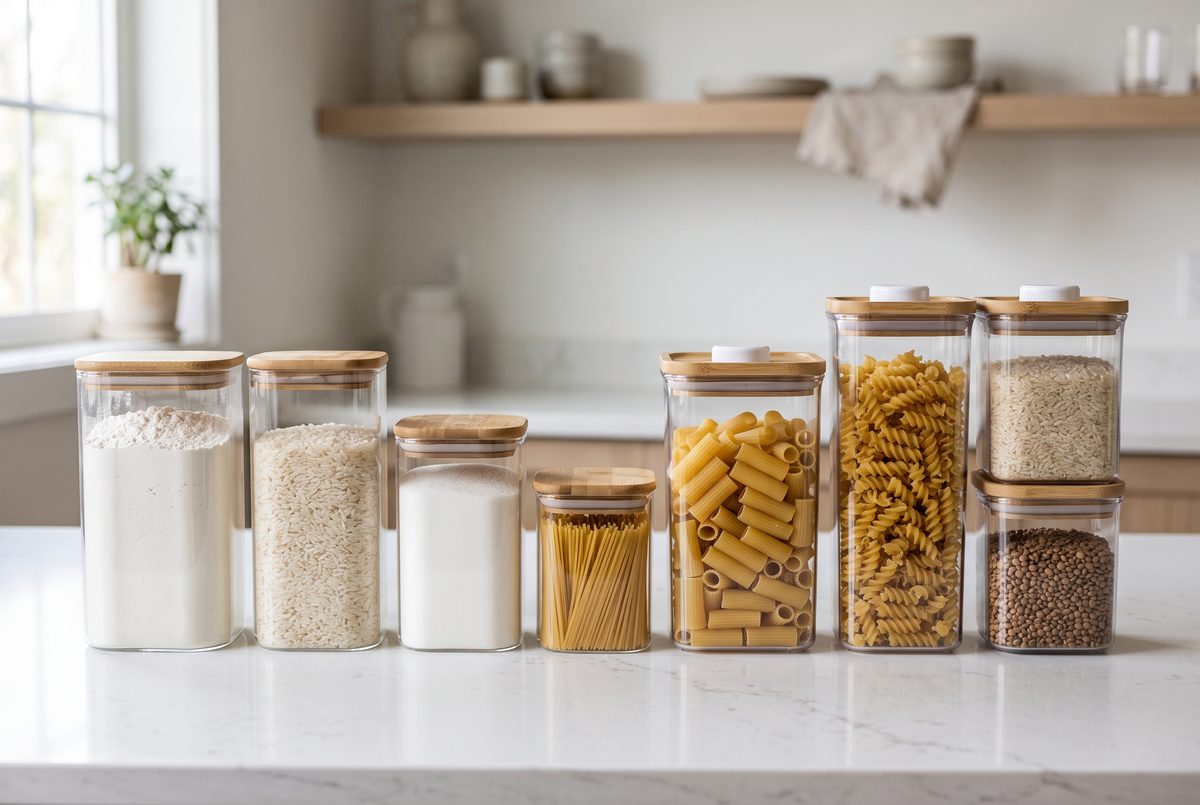
- They aren't competitors so much as different answers. OXO POP is a modular dry-goods system built around a push-button seal. Caraway's storage is a glass-and-ceramic set built around looking good on an open shelf.
- Shelf depth decides this more than brand loyalty. POP's rectangular footprint uses a deep shelf efficiently. Caraway's rounded glass wastes corner space but is far easier to read at a glance.
- One-handed opening is OXO's real advantage — it matters more day-to-day than most reviews admit, especially if you're holding a baby or a measuring cup.
- Neither is right for a wet-goods or freezer-first kitchen. If you mostly store leftovers rather than flour and cereal, both are the wrong purchase.
- We have not personally tested either set. This comparison is built from published manufacturer specifications, material properties and documented owner complaints — sources are named throughout.
What's in this guide
Search "best pantry containers" and you will often find ranked lists that do not explain why you would choose either system. A more useful comparison starts with the measurable constraint: how deep are the shelves you need to fill?
The short verdict
Choose OXO POP if your pantry is deep, you store mostly dry goods, and you open containers often — the one-handed push-button seal is a genuine daily improvement. Choose Caraway if your storage is on open shelving where it will be seen, you prefer glass to plastic on principle, and your shelves are shallow enough that you can reach the back. Choose neither if you mainly store leftovers and prepped meals — that's a different product category.
Start with shelf depth, not brand
Before comparing lids, measure the depth of the shelf you're filling. This single number eliminates most of the decision, and it's the step every roundup skips.
A standard US kitchen wall cabinet is often around 12 inches deep, while pantry cabinets and closet shelves can be deeper. On a deeper shelf, front items may obscure the back depending on sightline, lighting, and arrangement. That is why an apparent container problem can sometimes be a visibility problem instead.
Side-by-side comparison
| Factor | OXO Good Grips POP | Caraway glass storage | Who should care |
|---|---|---|---|
| Primary material | BPA-free plastic body, silicone gasket | Glass body, ceramic-coated lids on some sets | Anyone avoiding plastic on principle |
| Seal mechanism | Push-button, one-handed | Clamp or press lid, two hands | Frequent openers; anyone with grip limitations |
| Footprint | Rectangular, tiles without gaps | Rounded, loses corner space | Deep or narrow shelves |
| Stacking | Designed to stack; flat lids | Limited stacking | Tall shelf gaps |
| Contents visibility | Clear body, contents visible from front | Fully transparent glass, best at-a-glance read | Open shelving |
| Weight when full | Lighter — easier on high shelves | Heavy — a consideration above head height | Anyone using top shelves |
| Best suited to | Flour, sugar, rice, pasta, cereal | Display-forward dry goods, decanted staples | — |
| Known complaint | Gasket needs periodic cleaning; button can trap residue | Weight and breakage risk; corner space loss | — |
The seal question
Airtightness is the entire argument for decanting dry goods in the first place. A sealed container slows staling, keeps humidity out, and — the reason most people finally act — denies pantry moths a food source. On that last point, university extension guidance is consistent: sealed, rigid containers are recommended specifically because pantry pests chew through paper and thin plastic packaging.
Both systems seal well enough for that purpose. The difference is friction. OXO's push-button opens with one hand, which sounds trivial until you count how often you're holding something else. Caraway's lids ask for two hands but give you a fully transparent container, which means you restock from sight rather than memory.
Neither seal survives neglect. Silicone gaskets accumulate flour and oils; that residue is what eventually breaks the seal and, in the worst case, grows mould. Whichever you buy, the gasket comes out and gets washed periodically. Reviews rarely mention this because it only becomes obvious after a year of ownership.
Who each system is wrong for
The most useful thing a comparison can do is tell you when not to buy.
- Skip both if you mostly store leftovers. These are dry-goods systems. Wet food, prepped meals and freezer storage want a different product entirely — borosilicate meal-prep containers with locking lids.
- Skip Caraway if your shelves are above eye level. Full glass containers are heavy, and lifting one down over a countertop is a genuine breakage risk.
- Skip OXO if the containers will be on display and that matters to you. POP is designed to be efficient, not decorative. On open shelving, glass simply looks better.
- Skip decanting altogether for anything you buy rarely. Transferring a bag of specialty flour you use twice a year into a premium container is a container you've spent money to leave nearly empty.
What to look at
Rather than prescribing a set size — which depends entirely on what you actually store — here's how to shortlist. Check current specifications and reviews yourself before buying; product lines change.
Start with a small mixed-size set, not a large uniform one
Most people over-buy large containers and under-buy small ones. A mixed starter set tells you your real ratio before you commit further. Verify the current seal design and dishwasher guidance on the listing.
Retail links added after affiliate approvalNo purchase link is active. Compare current specifications and retailers independently.
Confirm the lid type and shelf clearance before ordering
Measure your shelf gap first — glass sets are frequently taller than expected, and a container that doesn't fit upright defeats the purpose. Confirm oven and dishwasher ratings on the current listing rather than assuming.
Retail links added after affiliate approvalNo purchase link is active. Compare current specifications and retailers independently.
Common questions
Is glass actually safer than plastic for dry food?
For dry goods specifically, the practical difference is small. Concerns about plastic largely centre on heat and on leaching into fatty or acidic foods — conditions that don't apply to flour in a sealed jar at room temperature. Both OXO POP and Caraway are sold as food-safe.
Glass is genuinely preferable for reheating, for oily contents, and if you'd rather avoid plastic entirely. We're describing published material properties here, not making a health claim.
Can I mix the two systems?
Yes, and it's often the sensible answer. A common split is POP for bulk staples on deep or high shelves where weight and efficiency matter, and glass for the few items that live on open shelving. Buying one uniform system is an aesthetic decision, not a functional requirement.
Will either stop pantry moths?
A properly sealed rigid container denies moths access, which is why extension services recommend them. But sealing doesn't remove an existing infestation — if larvae came home inside a bag of flour, sealing that bag's contents traps the problem in your nice new container. Deal with an active infestation first, then decant.
Have you tested these yourself?
No. We haven't purchased either set, and we won't claim otherwise. This comparison draws on published manufacturer specifications, established material properties, and patterns in documented owner complaints. Where we're inferring rather than citing, we say so in the text.
Evidence & limitations
Sources used for this guide
- OXO: POP Container specifications — Manufacturer-published dimensions, materials, care, and feature claims.
- Caraway: Food Storage Set specifications — Manufacturer-published materials, dimensions, care, and feature claims.
How to read this: Manufacturer pages support product specifications; institutional sources support the cited guidance. Our comparisons and recommendations are editorial analysis, not laboratory testing.
Working out your pantry setup?
Save this comparison to your kitchen organization board for when you're measuring shelves.